In short
On our own assumptions (€0.10 per kWh), charging an electric motorbike costs between around 40 cents for a city model and around €1.40 for the highest-performance ones per 100 km. It charges from a normal socket and is serviced at our official workshop in Palma. For a fleet we put together a tailored proposal: tell us about your case.
What you should know before setting up an electric motorbike fleet in Mallorca: what the energy costs, where to charge, which motorbike to choose for each job, what maintenance it needs and which rules affect a business.
Last updated: · By the Motos Eléctricas Mallorca team
Is an electric motorbike fleet worth it for a business in Mallorca?
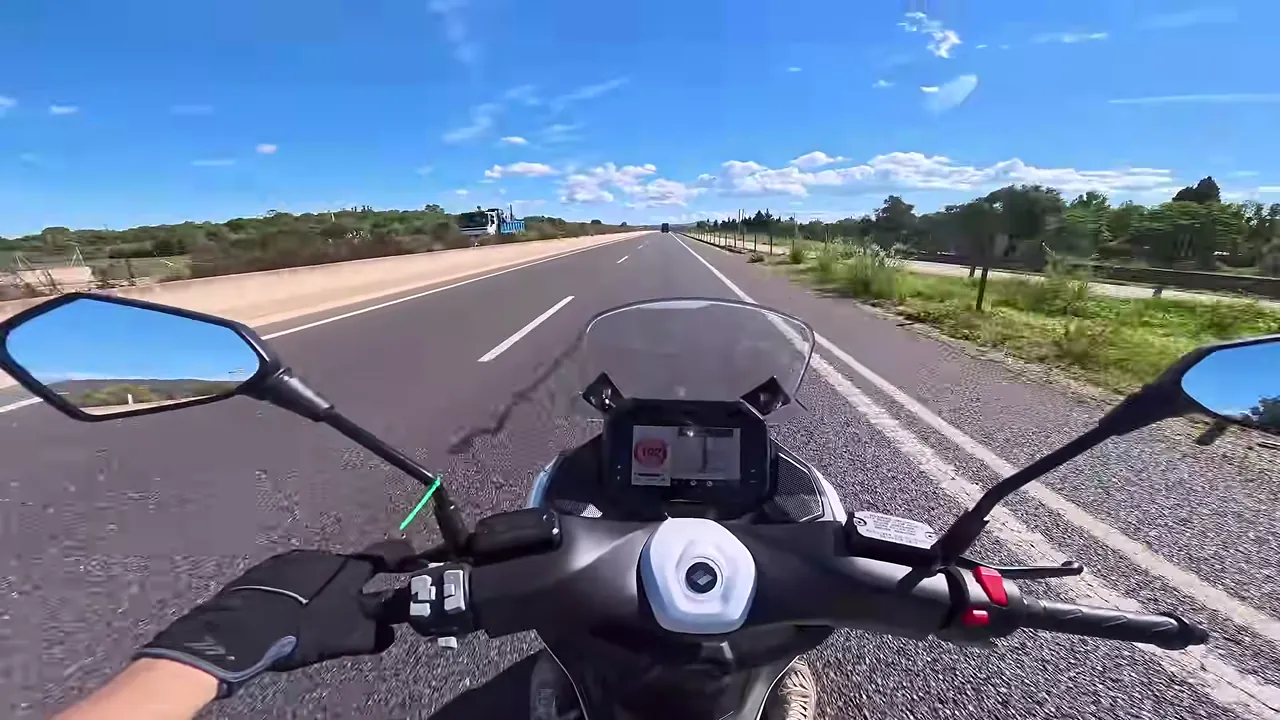
With daily use around town and around the island, it usually pays off, and Mallorca helps: distances are short (from Palma to almost anywhere on the island is less than 70 kilometres), the climate is mild, and Palma's traffic, with its traffic lights and its ring road (the Vía de Cintura), is exactly where an electric motorbike performs best.
Compared with an equivalent petrol motorbike, you pay more when you buy it and less every month, in energy and in maintenance: an electric one has no engine oil, filters, spark plugs, clutch or exhaust. How long it takes to pay off depends on the kilometres each motorbike does a year: with daily use, sooner; with occasional use, much later. Do the sums with your own kilometres and your real costs: don't take any figure that isn't yours at face value, not even ours.
More detail in our guides on electric or petrol motorbike and how much an electric motorbike costs.
How much does it cost to charge an electric motorbike fleet compared with petrol?
Energy only, on our own assumptions: €0.10 per kWh if you charge at home or at the company's base, and €0.25 per kWh at a public charging point on the street, which are the most common figures. The consumption figures come from our range calculator, for an 85 kg rider at 20 °C.
To compare it with petrol, do the sums with your own numbers: the litres your petrol motorbike uses every 100 km, times what you pay per litre. We don't give a petrol price here because it changes every week.
The formula is the same for any motorbike: kilometres per year ÷ 100 × consumption (kWh per 100 km) × price per kWh = annual energy cost. An example with the assumptions in plain view: a motorbike that does 100 km a day for 250 days a year covers 25,000 km; with a consumption of 6 kWh per 100 km it uses 1,500 kWh a year, which is around €150 if it charges at the base and around €375 if it always charges on the street. Charging at night on a time-of-use tariff, even less.
| Type of motorbike and use | Consumption (kWh per 100 km) | Charging at the base (€0.10 per kWh) | Charging on the street (€0.25 per kWh) |
|---|---|---|---|
| City model, in town | 4 | €0.40 | €1.00 |
| City model, on the open road | 6.5 | €0.65 | €1.63 |
| Mixed-use scooter, at speed | 6 to 9 | €0.60 to €0.90 | €1.50 to €2.25 |
| Maxi-scooter or large motorbike at 120 km/h (Velca ONE and EON, Next NX2, Zero S) | 8.4 to 10.5 | €0.84 to €1.05 | €2.10 to €2.63 |
| High-performance or off-road motorbike at 120 km/h (Zero SR/F and DSR/X, Zero FXE, Stark Varg) | 12.6 to 13.9 | €1.26 to €1.39 | €3.15 to €3.48 |
Where and how are the company's motorbikes charged?
From a normal socket. Every motorbike in our range charges from a household socket, with nothing to install: the motorbike comes with its own charger. Depending on the model, it takes 2 to 6 hours from empty to 100%, and the usual thing is to leave it charging overnight. The most demanding one draws 3.3 kW, about the same as an oven.
If your company has car charging points (Type 2), the motorbikes that have that connector charge directly and the rest with a Type 2 to household socket adapter, which we sell. The adapter doesn't charge any faster, because the motorbike charges at its usual power, but it solves where to plug it in.
Models with a removable battery let you take the battery out and charge it somewhere else. They are heavy: on a motorbike of around 4 kWh, 20 to 22 kg; some have two batteries of around 10 kg, which are easier to carry upstairs.
Installing charging points at your company (contracted power, electrical panel, building work) is a job for an authorised installer; the motorbike doesn't need it. There is a grant from the Govern balear (the Balearic government) and free depreciation for charging points: we explain them in grants and tax.
Which motorbike should you choose for each job in the fleet?
Our rule: first ask you what you'll use it for, how many kilometres it will do each day and where you'll charge it, and recommend one or two motorbikes. Real kilometres depend on the route, the weight it carries and how it is ridden: our range calculator estimates them for the motorbike and route you choose, with an 85 kg rider and not counting delivery cargo or a passenger.
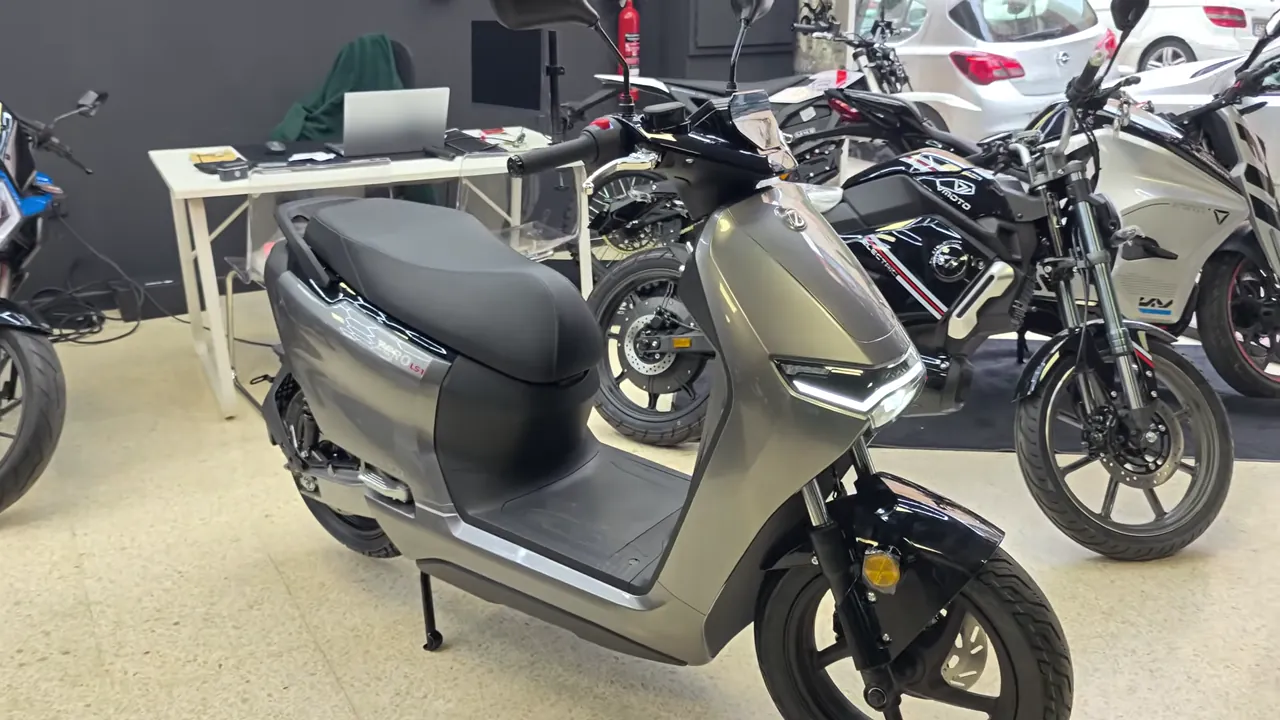
- Around 150 km a day of city or open-road riding, with charging at the base: Velca ONE, Velca EON or Next NX2. If much of it is motorway, the numbers change: the ONE does 151 km at 90 km/h and 98 at 120 km/h (table below).
- With nowhere to charge where the motorbike is kept: Next Mojito Power Pack, with two batteries and up to 200 km on one charge according to Next (riding in D mode, at an average of 65 km/h). It is a city motorbike, not one for long motorway runs.
- Short trips around town: a 45 km/h electric moped, which can't go on motorways or dual carriageways, or a city 125.
| Motorbike | Licence | City | Open road (90 km/h) | Motorway (120 km/h) |
|---|---|---|---|---|
| Velca ONE | A1, or B held for more than three years | 205 | 151 | 98 |
| Velca EON | A1, or B held for more than three years | 325 | 221 | 147 |
| Next NX2 | A1, or B held for more than three years | 216 | 155 | 101 |
| Next Mojito Power Pack | A1, or B held for more than three years | 198 | 148 | 148 (at 90 km/h) |
| Segway E300SE | A1, or B held for more than three years | 100 | 75 | 60 (at 105 km/h) |
How do you know where the motorbikes are and which routes they take?
Each brand has its own app. If you want to know where each motorbike is and which routes it takes, our recommendation is a model with technology like Niu: its app locates the motorbike, shows the battery and keeps a history of trips. Depending on the model, some also have a GPS tracker and anti-theft system.
That app is designed for the motorbike's owner: we don't sell it as fleet management software. If you need to keep track of several motorbikes at once, tell us what you need to monitor and we'll look at it with you.
What maintenance does a fleet need, and what happens if a motorbike breaks down?
An electric motorbike has no engine oil, filters, spark plugs, clutch or exhaust. What gets maintained is the tyres, the brake pads and fluid, the bearings, the suspension, the battery connections and the software; some models have oil in the reduction gearbox.
Each brand and each model has its own maintenance plan: services are done when the manufacturer says (by kilometres or by time, whatever its manual states). Our recommendation: between every 6 months and once a year. If you have several motorbikes, note down the date of each one's next service.
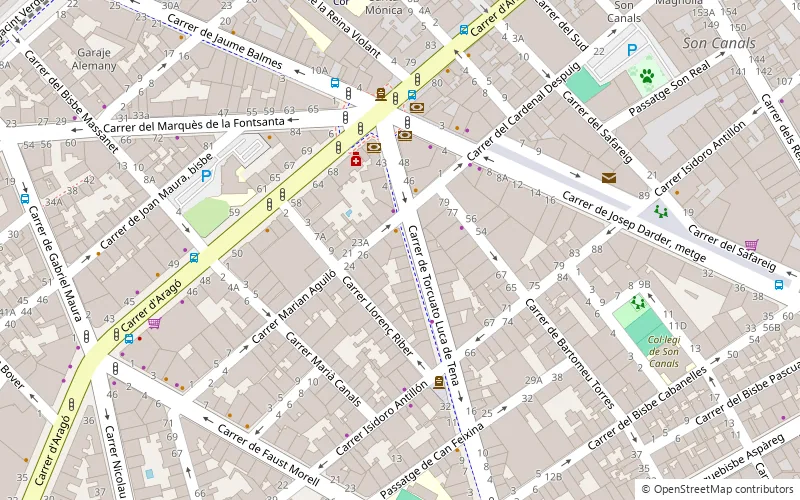
Our workshop is official for the ten brands we sell, with each brand's diagnostic equipment and genuine parts (our own stock in Palma and direct orders from the factory for anything we don't have). We handle warranty claims with the brand: you bring the motorbike, we diagnose it and we order the part. We also look after motorbikes of those brands that weren't bought here.
Breakdowns are treated as urgent and the time depends on the fault. If a replacement motorbike is available, we provide one; we don't promise it, because sometimes demand takes them all. We give you a quote before starting any work. More in the guide to maintenance and services and on the workshop page.
What warranty do a company's motorbikes have?
Each brand gives its own commercial warranty, with its own terms for the battery, and we hand it to you in writing with the motorbike. In our experience, the battery rarely causes problems, and with most brands it has its own warranty. To keep the warranty, services must be kept up to date at an authorised workshop, like ours. The warranty doesn't cover normal wear (tyres, pads), damage from a fall or impact, or chargers that aren't the original ones.
We don't take it for granted that a brand's warranty is the same for intensive professional use as for private use: before buying several motorbikes for work, ask us what terms the brand you're interested in has, and what warranty applies if you buy as a company. The commercial warranty is given by each brand and we handle it from Palma.
What insurance and gear does the law require of someone who rides a motorbike for work?
Insurance. Each motorbike needs its own compulsory third-party liability insurance: the obligation is per vehicle. Insurance isn't included in the price of the motorbike; its registered keeper takes it out. “Fleet insurance” is a commercial product of insurers that the law doesn't define: ask your insurer or broker what it covers.
Gear. From 1 October 2026, anyone riding a motorbike or moped must wear a UNECE R22 type-approved helmet and closed footwear covering the whole foot on any road, and protective gloves on interurban roads. Anyone who rides a motorbike or moped for work must also wear a high-visibility reflective vest on all types of road. And every motorcycle must carry a high-visibility reflective vest as part of its equipment, which the rider must put on if they get off the motorbike and are on the carriageway or hard shoulder of an interurban road. Mopeds have until 1 October 2027 to switch from a certified helmet to a type-approved one. We cover it in our news on gloves and on footwear, helmet and hard shoulder.
Sources: BOE: Royal Legislative Decree 8/2004 (Real Decreto Legislativo 8/2004), compulsory motor vehicle insurance, article 2 (opens in a new tab) (consolidated text) · BOE: Royal Decree 518/2026 (Real Decreto 518/2026), reform of the General Traffic Regulations (helmet, footwear, gloves and vest) (opens in a new tab) (26/06/2026).
What other rules affect a motorbike fleet in the Balearic Islands?
Risk prevention. The law requires the company to protect the safety and health of its workers, to give them free of charge the protective equipment they must use and to train them. How this applies to those who ride motorbikes is decided by your company's risk assessment: check with your occupational risk prevention service.
Palma's Low Emission Zone. In the “Centre Ciutat” zone, inside the Avenidas, battery electric motorbikes enter freely in all periods of the Low Emission Zone (ZBE) bylaw: today, from 1 January 2027 and from 1 January 2030. This refers to that bylaw: the restricted traffic areas (ACIRE), regulated parking (ORA) and restricted parking zones (ZAR) inside the centre still follow the Municipal Traffic Bylaw (Ordenanza Municipal de Circulación), so check their rule for motorbikes with MobiPalma or the city council. Entering without meeting the requirements carries a €200 fine and has been enforced by number-plate reading since 1 July 2025. From 1 January 2027, vehicles with the DGT's B label can no longer enter: if your company uses combustion vans or cars, that day things change for them.
Balearic climate change law. Law 10/2019 (article 63) requires vehicle rental companies and medium and large companies that renew more than 30% of their vehicles each year to make a minimum percentage of what they acquire emission-free: 22% of the units acquired in 2026 and 28% in 2027. It applies to cars, motorcycles and mopeds of companies with a fleet in the Illes Balears, and those that submit an emissions reduction plan validated by the Consejería (the regional ministry) are exempt. The Govern can change the percentages by decree. If your company is small and has few motorbikes, it probably doesn't affect you; check with your adviser.
Sources: BOE: Law 31/1995 on Occupational Risk Prevention, articles 14, 17 and 19 (opens in a new tab) (consolidated text) · MobiPalma: Palma Low Emission Zone bylaw, annex 2 (periods) (opens in a new tab) (13/11/2024) · BOIB no. 37: Palma City Council notice on the Low Emission Zone (opens in a new tab) (24/03/2026) · BOE: Law 10/2019 on climate change and energy transition of the Illes Balears, article 63 and annex (opens in a new tab) (consolidated text).
Which companies have worked with us?
Have bought electric motorcycles from us: hotels and accommodation (Ikos Porto Petro, Iberostar, Nenecau Hotels and Sidehoteles), restaurants (Esclot Pizzería Bahía Grande), building, renovation and services (Obratec Restauración y Reformas, Lagunema (VNG Reformes), Grup Vertical Multiservicio and Ferrería Sastre), boating and sport (Smart Yacht Mallorca and Reynes Cycling), automotive (Tallers Suauto) and other businesses (Brinkmöller). Have brought their motorcycles to our workshop: restaurants (Island Sushi), services (Juaneda Servicios y Procedimientos, Ideas y Publicidad and Vall de Sóller Telecomunicaciones), boating and sport (Nautic Group VMM and Partners) and automotive (Multi-Auto Palma).
See the companies we have worked with, by sector
We list only the name of each company, for information purposes: it does not imply that they recommend or sponsor our services, and the names belong to their owners. If your company appears here and you would rather it did not, write to us and we will remove it. Our email: support@motosemallorca.com.
How do we get started with your fleet?
Tell us about your case: how many motorbikes, what for, how many kilometres a day and where you would charge them. We recommend one or two motorbikes, put together a tailored proposal and, if you like, you can test-ride the motorbike before deciding. The price of each motorbike is the one on its page, on the road.
The quickest way
Message us on WhatsApp615 71 80 98 · Our automated assistant (powered by artificial intelligence) replies straight away and, if needed, a member of our team.
Administration (workshop and paperwork): 675 34 26 36. Test rides are on whichever demo bikes are available that day, and for adults only.
Frequently asked questions
How much does it cost to charge an electric motorbike fleet?
On our own assumptions (€0.10 per kWh at the company's base), 100 km costs between around 40 cents on a city model and around €1.40 on the highest-performance motorbikes. A motorbike doing 25,000 km a year with a consumption of 6 kWh per 100 km uses around €150 in energy; on the street, at €0.25 per kWh, around €375.
Do I need a special installation to charge the company's motorbikes?
No. The motorbikes in our range charge from a household socket. If there are car charging points, those with a Type 2 connector charge directly and the rest with an adapter.
How long does an electric motorbike take to charge?
Depending on the model, 2 to 6 hours from empty to 100%. The usual thing is to leave it charging overnight, and you almost never charge from zero, so each charge is usually shorter.
How many kilometres a day can an electric work motorbike manage?
It depends on the model and the use. For around 150 km a day with charging at the base we recommend the Velca ONE, the Velca EON or the Next NX2; the Next Mojito Power Pack, with two batteries, reaches up to 200 km according to Next if you can't charge where you keep it. These are estimates: our calculator gives you the one for your route.
What maintenance does an electric motorbike fleet need?
Tyres, brake pads and fluid, bearings, suspension, connections and software: there is no engine oil, no filters and no spark plugs. The service is done when the manufacturer of each model says, by kilometres or by time; our recommendation, between every 6 months and once a year.
What happens if a fleet motorbike breaks down?
Breakdowns are treated as urgent and the time depends on the fault. There is a replacement motorbike if one is available, but we don't promise it.
Is there an official workshop in Mallorca for an electric motorbike fleet?
Yes: ours, in Palma, is official for ten brands, with manufacturer diagnostics and genuine parts, and it also looks after motorbikes of those brands that weren't bought here.
Can you tell where each motorbike in the fleet is?
It depends on the model. Niu's app locates the motorbike, shows the battery and keeps the trip history; we don't sell it as fleet management software. Tell us what you need to monitor and we'll look into it.
What warranty do motorbikes for business use have?
Each brand gives its own commercial warranty, with its terms for the battery, and we hand it to you in writing with the motorbike. Before buying several for intensive professional use, ask us what terms that brand has.
What gear is compulsory for someone who rides a motorbike for work?
From 1 October 2026: a UNECE R22 type-approved helmet, closed footwear on any road, gloves on interurban roads and, for those who ride professionally, a high-visibility reflective vest on all types of road.
Can electric motorbikes enter Palma's Low Emission Zone?
Yes, under the Low Emission Zone bylaw: battery electric motorbikes enter freely in all periods of the “Centre Ciutat” zone (today, from 1 January 2027 and from 1 January 2030). The ACIRE, ORA and ZAR zones in the centre still follow the Municipal Traffic Bylaw: check their rule for motorbikes.
Do you work with companies in Ibiza, Menorca and Formentera?
We work with Ibiza, Menorca and Formentera regularly. Sea transport has its own cost and lead time, and we tell you case by case before giving a price.
The official sources for each section are linked below it, with the date of the source itself. Accessed on 7 October 2026.