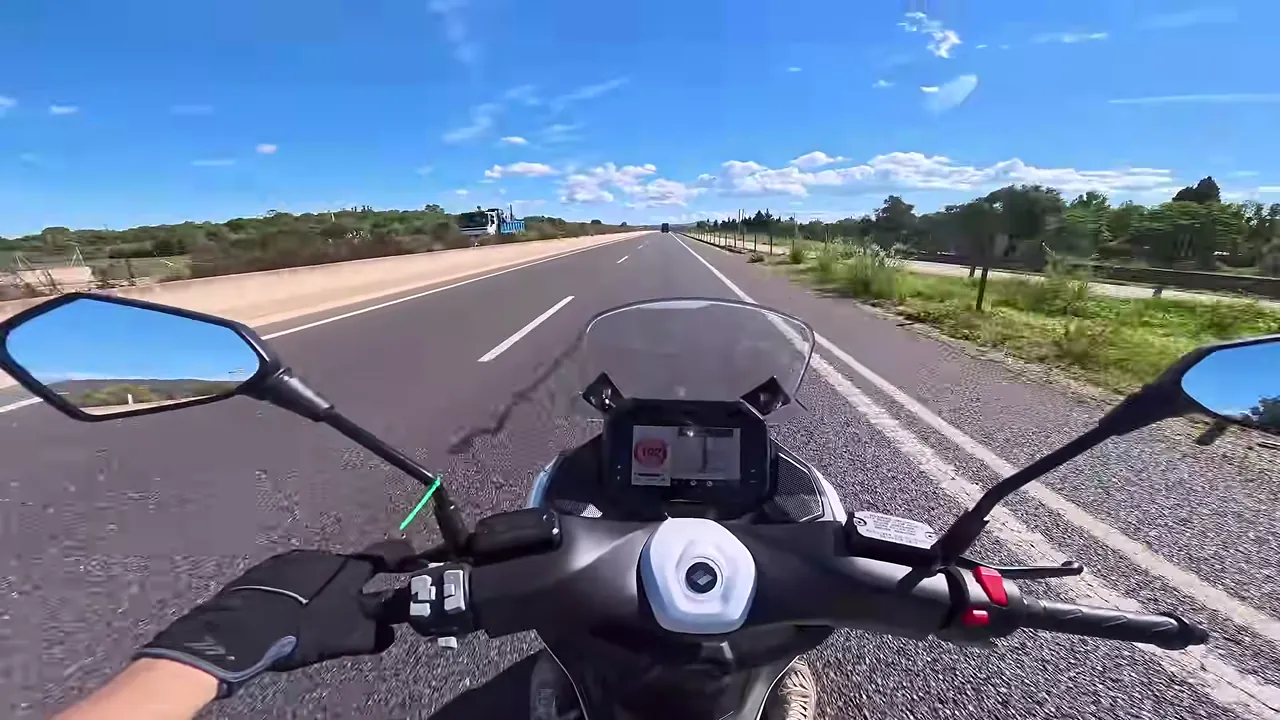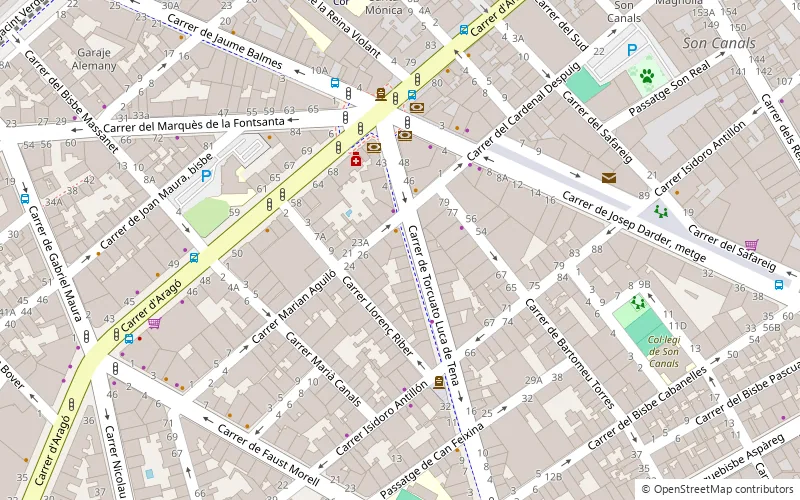
In short
A business can make it easier for its employees to buy an electric motorcycle from us: each one chooses, tests and buys their own. If the business pays for or subsidises part of it, it is treated as remuneration and it is worth checking with your tax adviser. We do not publish a fixed programme for employees: tell us about your case and we will make you a tailored proposal.
There are several ways for the employees of a Mallorca business to get an electric motorcycle, and each one is treated differently for tax and payroll. Here we set them out, with what the law says and what you should check with your tax adviser.
Last updated: · By the Motos Eléctricas Mallorca team
In what ways can a business offer an electric motorcycle to its employees?
There are three routes, and the difference lies in who pays and whose name the motorcycle is in. This table sets them out; the tax and employment treatment of each depends on your business, so check with your tax adviser or your employment adviser.
When each employee buys and pays for their own motorcycle, the purchase does not go through the company's accounts. If the business pays, advances or deducts part of it from the payslip, the treatment changes. We are not aware of a specific tax regime for employee motorcycle purchase schemes: that is why any arrangement should go through your tax adviser.
| Option | Who buys and pays | What changes for the business | Who to check with |
|---|---|---|---|
| The employee buys their motorcycle from us | The employee, personally and in their own name | The purchase is between the employee and the dealer and does not go through the company's accounts. The employee can take advantage of the grants for private individuals if they meet the conditions. | The employee, with their own tax adviser if they wish |
| The business buys the motorcycle and provides it to the employee | The business, in its own name | The motorcycle belongs to the business: how much of the VAT and the expenses it can benefit from depends on the use (see grants and tax). If the employee can use it for private purposes, it is payment in kind (retribución en especie) for them. | Your tax adviser |
| The business pays for or subsidises part of the employee's motorcycle | The employee buys in their own name; the business contributes money or deducts it from the payslip | It is remuneration for the employee, in cash or in kind, and Social Security contributions are payable on it. If it is in kind, it cannot exceed 30% of their salary payments. | Your tax adviser or your employment adviser |
Sources: BOE: Law 35/2006 on IRPF, 58th and 59th additional provisions and articles 42 and 43 (opens in a new tab) (consolidated text) · BOE: Workers' Statute (Estatuto de los Trabajadores), article 26 (opens in a new tab) (consolidated text) · BOE: General Social Security Act (Ley General de la Seguridad Social), articles 147 and 156 (opens in a new tab) (consolidated text) · BOE: Law 37/1992 on VAT (Ley del IVA), article 95 (consolidated text) (opens in a new tab) (consolidated text).
What can each employee do if they buy their motorcycle from us?
The same as any customer: book the free test ride, reserve with a deposit and leave the registration and the paperwork to us. The motorcycle is handed over charged and with a full explanation.
As a private individual with no business activity, the employee may be entitled to the grants and deductions for private individuals if they meet the conditions: we explain them in the guide to grants and subsidies. They are public grants, with their deadlines and their small print: neither we nor anyone else can guarantee them, and the income tax deduction is a matter for their tax adviser.
What licence do employees need to ride an electric motorcycle?
It depends on the motorcycle. The AM licence (from age 15) covers mopeds up to 45 km/h, and so does the B (car) licence. The A1 licence (from age 16) covers motorcycles up to 125 cc and 11 kW, and a B licence held for more than three years also covers them in Spain. Only a few motorcycles, such as the Zero SR/F and DSR/X, require the A licence.
Each employee needs the licence for the motorcycle they ride. If someone has a licence from another country, it depends on whether it is valid in Spain and equivalent to a B held for three years or to an A1: ask us with their licence in hand. More in the guide to which licence you need and in the motorcycles you can ride on a car licence.
Sources: BOE: General Drivers Regulations (Royal Decree 818/2009), article 4 (opens in a new tab) (consolidated text).
What gear and what insurance does an employee who rides a motorcycle need?
Since 1 October 2026, anyone riding a motorcycle or moped must wear a UNECE R22 type-approved helmet and closed footwear covering the whole foot on any road, and protective gloves on interurban roads. Anyone riding a motorcycle or moped for work must also wear a high-visibility reflective vest on all types of road. And every motorcycle must carry a high-visibility reflective vest as part of its equipment, which the rider must put on if they get off the motorcycle and are on the carriageway or hard shoulder of an interurban road. Mopeds have until 1 October 2027 to switch from a certified helmet to a type-approved one. We cover it in our news stories on gloves and on footwear, helmet and hard shoulder.
Each motorcycle needs its own compulsory third-party liability insurance: the obligation is per vehicle and falls on its registered keeper, the employee if the motorcycle is theirs and the business if it belongs to the business.
Sources: BOE: Royal Decree 518/2026, reform of the General Traffic Regulations (helmet, footwear, gloves and vest) (opens in a new tab) (26/06/2026) · BOE: Royal Legislative Decree 8/2004, compulsory motor vehicle insurance, article 2 (opens in a new tab) (consolidated text).
What must the business do when its employees ride to work?
Accidents that an employee has on the way to or from work (in itinere) are considered work accidents, and the INSST (Spain's national institute for occupational safety and health) recommends an occupational road safety plan based on the risk assessment. The occupational risk prevention law requires the business to protect the safety and health of its employees, to provide them free of charge with the protective equipment they must use and to train them. Whether the protective gear of someone who commutes on their own motorcycle counts as company protective equipment is something we have not found to be clear in the regulations we have consulted: check with your prevention service.
Sources: BOE: General Social Security Act (Ley General de la Seguridad Social), articles 147 and 156 (opens in a new tab) (consolidated text) · BOE: Law 31/1995 on Occupational Risk Prevention, articles 14, 17 and 19 (opens in a new tab) (consolidated text) · INSST: occupational road safety (opens in a new tab) (accessed on 07/10/2026).
What if the employee cannot charge the motorcycle at home?
It is the first thing we ask in the shop, because it decides which motorcycle fits. There are models with a removable battery: you take it indoors and charge it from a normal socket, and some have two batteries of about 10 kg, which are easier to carry up. Every motorcycle in our range charges from a household socket, so one option is for the business to offer a socket at work.
If the business has car charging points (Type 2), the motorcycles that come with that connector charge directly and the others with a Type 2 to household socket adapter. More in the guide to real range and in fleets: where they charge.
Does your business have more than 200 employees at one workplace?
Law 9/2025 on Sustainable Mobility (Ley de Movilidad Sostenible, article 26) requires businesses to have a sustainable commuting mobility plan at workplaces with more than 200 employees, or 100 per shift. It is negotiated with the workers' representatives and covers sustainable mobility solutions: the law gives as examples active mobility, public transport, low-emission mobility and charging for zero-emission vehicles.
According to the BOE, the deadline is twelve months from the law's entry into force, which was on 5 December 2025: that is, around 5 December 2026. Confirm the date with your employment adviser. The law does not mention motorcycles or require anyone to buy them. It only affects large workplaces, such as some hotels.
Sources: BOE: Law 9/2025 on Sustainable Mobility, article 26 (opens in a new tab) (04/12/2025).
Which businesses have worked with us?
Have bought electric motorcycles from us: hotels and accommodation (Ikos Porto Petro, Iberostar, Nenecau Hotels and Sidehoteles), restaurants (Esclot Pizzería Bahía Grande), building, renovation and services (Obratec Restauración y Reformas, Lagunema (VNG Reformes), Grup Vertical Multiservicio and Ferrería Sastre), boating and sport (Smart Yacht Mallorca and Reynes Cycling), automotive (Tallers Suauto) and other businesses (Brinkmöller). Have brought their motorcycles to our workshop: restaurants (Island Sushi), services (Juaneda Servicios y Procedimientos, Ideas y Publicidad and Vall de Sóller Telecomunicaciones), boating and sport (Nautic Group VMM and Partners) and automotive (Multi-Auto Palma).
See the companies we have worked with, by sector
We list only the name of each company, for information purposes: it does not imply that they recommend or sponsor our services, and the names belong to their owners. If your company appears here and you would rather it did not, write to us and we will remove it. Our email: support@motosemallorca.com.
How do we get started?
Tell us about your case: how many employees, what you want the business to do and not do, and how your staff get around. We will tell you what we can do and make you a tailored proposal. The price of each motorcycle is the on-the-road price shown on its page.
The quickest way
Message us on WhatsApp615 71 80 98 · Our automated assistant (powered by artificial intelligence) replies straight away and, if needed, a member of our team.
Administration (workshop and paperwork): 675 34 26 36. Test rides are on whichever demo bikes are available that day, and for adults only.
Frequently asked questions
Can a business offer electric motorcycles to its employees?
Yes, in several ways: the employee buys their own, the business buys the motorcycle and provides it, or the business pays for or subsidises part of it. Each one is treated differently for tax and payroll: check with your tax adviser.
Can my employees buy their electric motorcycle at your shop?
Yes. Each employee can book the free test ride, reserve with a deposit and buy from us like any other customer; we take care of the registration and the paperwork.
Do you offer special terms for a company's employees?
We do not publish special terms or discounts for employees: the price of each motorcycle is the on-the-road price shown on its page. If you want to set something up for your staff, tell us about your case and we will make you a tailored proposal.
Can an electric motorcycle be paid for through flexible remuneration (retribución flexible)?
That is for each business to decide with its tax adviser or employment adviser: we sell the motorcycle and do not manage remuneration schemes. If you want to explore it, tell us about your case.
What changes for the business if the employee buys their motorcycle?
If the employee buys and pays for their motorcycle personally, the purchase is between them and the dealer and does not go through the company's accounts. If the business pays, advances or deducts part of it from the payslip, it is remuneration and that changes things: check with your tax adviser.
Is it taxable if the business pays for part of an employee's motorcycle?
Yes, as remuneration: in cash if the business hands over the money for the employee to buy it, or in kind in other cases. There is no specific exemption for providing, giving or subsidising a motorcycle for an employee, and payment in kind is subject to Social Security contributions. How it applies to your case is for your tax adviser to decide.
What licence does an employee need to ride an electric motorcycle?
It depends on the motorcycle: the AM (from age 15) or the B for 45 km/h mopeds; the A1 (from age 16) or a B held for more than three years for electric 125s; the A only for a few, such as the Zero SR/F and DSR/X.
Who pays for insurance, maintenance and fines if the employee uses the motorcycle outside working hours?
It depends on whose name the motorcycle is in and what you agree in writing. Compulsory insurance is per vehicle and is taken out by its registered keeper. The rest (maintenance, use outside working hours, fines) is an agreement between business and employee that is best drawn up with your employment adviser.
What gear must an employee who rides a motorcycle wear?
Since 1 October 2026: a UNECE R22 type-approved helmet, closed footwear on any road and gloves on interurban roads; anyone who rides for work must also wear a high-visibility reflective vest on all types of road.
Does an accident riding to or from work count as a work accident?
Under the General Social Security Act, accidents that an employee has on the way to or from the workplace (in itinere) are considered work accidents. How it applies to a specific case is for your employment adviser to decide.
Does my business need a commuting mobility plan?
If it has a workplace with more than 200 employees, or 100 per shift, Law 9/2025 on Sustainable Mobility requires one, within twelve months of 5 December 2025 according to the BOE. The law does not require you to buy motorcycles. Confirm it with your employment adviser.
What if the employee cannot charge the motorcycle at home?
There are models with a removable battery that you take indoors and charge from a normal socket, and one option is for the business to offer a socket at work. Every motorcycle in our range charges from a household socket.
The official sources for each section are linked below it, with the date of the source itself. Accessed on 7 October 2026.