Regulations ·
What changes on 1 October for motorbike riders, besides gloves: footwear, helmets, the hard shoulder and intercoms
On Thursday 1 October Royal Decree 518/2026 comes into force and, besides gloves on open roads, it brings other rules for anyone riding a motorbike or a moped. The one Palma will notice most: closed footwear becomes compulsory on every type of road, in town too. The moped helmet also changes (with a year's grace), as do using the hard shoulder in traffic jams and what you may carry in your helmet.
By the Motos Eléctricas Mallorca team
Closed footwear on every road, in town too
On Thursday 1 October Royal Decree 518/2026 comes into force, amending Spain's General Traffic Regulations. The best-known change is gloves on open roads, which we already covered in this other article. But it is not the only one, and the one you will notice most day to day is footwear.
The text in the BOE (Spain's Official State Gazette) requires riders and pillion passengers of motorbikes, mopeds, three-wheelers, quadricycles and quads to wear “closed footwear that covers the whole foot” on every type of road. Unlike gloves, which are only required on open roads, this applies in town too.
It does not have to be a motorbike boot. According to FórmulaMoto, which cites a DGT (Spain's traffic authority) instruction of 25 September, footwear is not type-approved protective equipment: it is enough for it to have some system that holds the toes and the heel, and the aim is to stop people riding barefoot or in flip-flops. Motor16 reads it the same way: no motorbike boot or specific type of footwear is required.
A fine, yes; points, no. According to Motor16, riding without closed footwear is a serious offence with a €200 fine, reduced to €100 with the early-payment discount. And according to FórmulaMoto, that same DGT instruction states that neither riding without closed footwear nor riding without gloves costs you points on your licence.
In Mallorca this hits anyone getting around Palma on a scooter or an electric moped, especially in good weather: from Thursday, flip-flops stay at home for riding around town too. And the same goes for whoever rides behind.
The moped helmet: type-approved from October 2027
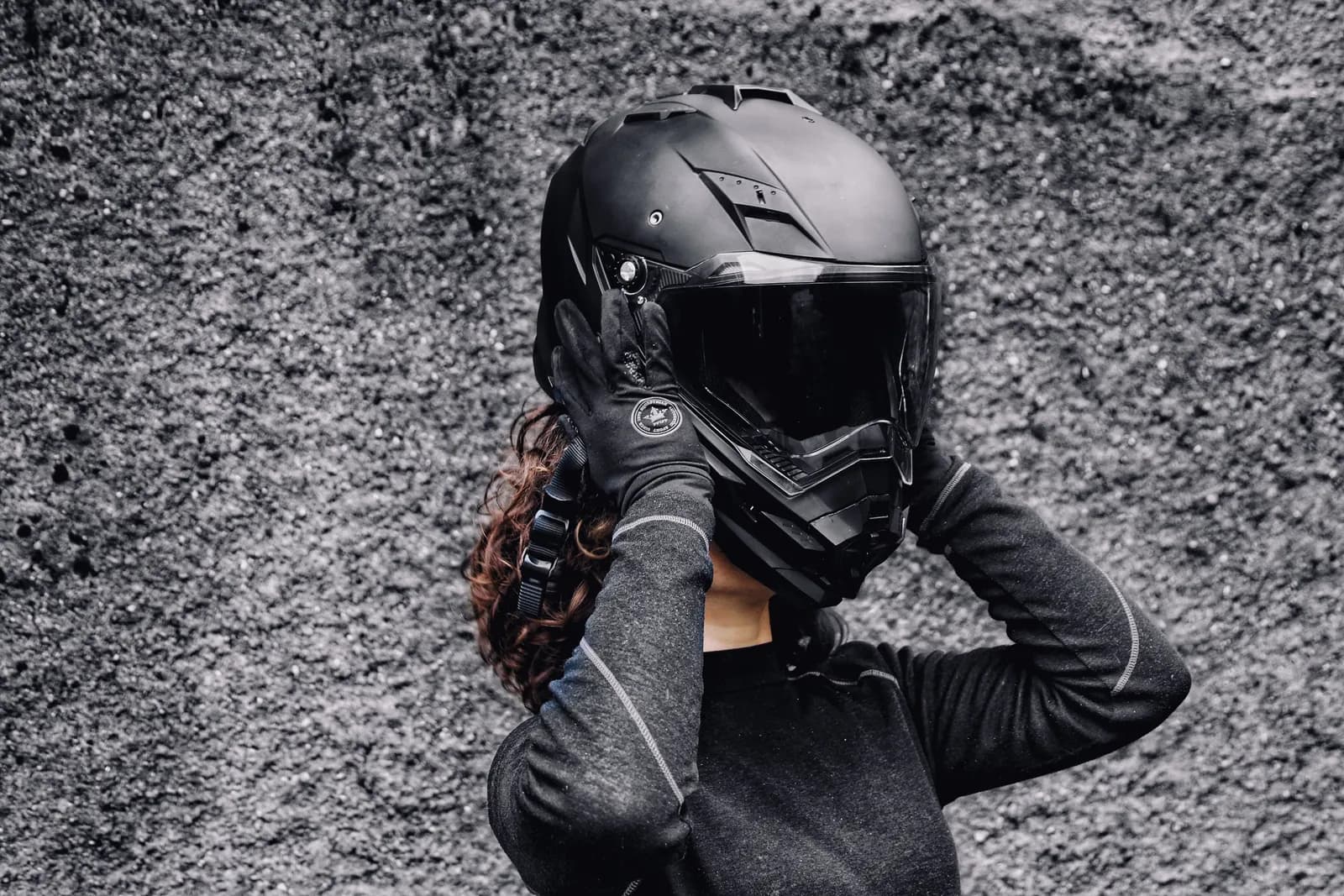
The regulations require everyone, on a motorbike or a moped, to wear a helmet type-approved under UNECE Regulation R22 and properly fastened, on any road. For motorbikes this is not new: according to ANESDOR, the industry association, motorbike helmets already had to carry that approval, and open-face (jet), full-face and modular helmets can still be used.
The change is for mopeds. Until now a certified helmet was enough; under the new rules it will have to be type-approved, which the Royal Decree itself says is safer. There is some leeway: the BOE lets certified helmets still be used on mopeds for one year from when the rule comes into force, that is, until 1 October 2027, as ANESDOR sums it up. The DGT put it this way on 24 September: the type-approved moped helmet is postponed by a year.
If you are going to buy an electric moped and need a helmet, get one type-approved under UNECE R22 now: it is valid today and will still be valid in 2027. And if you are not sure whether what you want is a motorbike or a moped, we explain it in the guide on which licence you need.
The hard shoulder in traffic jams: only on signposted stretches
The other change that has been talked about most is the hard shoulder. From 1 October the right-hand hard shoulder can be opened up so that motorbikes can move forward in traffic jams. But not just any hard shoulder, and not at any time: article 36 of the regulations limits it to specific stretches that have been agreed and signposted.
Do not get confused in Mallorca: none of the sources we have read mentions a signposted stretch on the island. Without the signs and the road markings, that hard shoulder is not open to motorbikes. According to FórmulaMoto, using it outside those conditions carries a €200 fine.
Also, the permission is for motorcycles. For mopeds the rule is different, in the same article: if there is no road or lane meant for them, they ride on the right-hand hard shoulder when it is passable and wide enough.
The conditions in article 36, one by one:
- Only on stretches agreed in advance between the road operator and the traffic authority, or the regional or local authority in charge of traffic.
- Those stretches have to be signposted with fixed signs and road markings.
- Only when the lanes are at a standstill because of a traffic jam.
- At a maximum of 30 km/h, in single file and with great care.
- Without endangering those who are entitled to use the hard shoulder (bicycles, mopeds): if necessary, the motorbike has to leave it.
Intercoms, sat nav and hi-vis vests
The regulations ban riding with earphones or with a mobile phone in your hand. But the new text makes an express exception for motorbikes and mopeds (article 18.2): wireless devices built into the helmet, certified or type-approved, as long as they are used only for talking (the intercom) or for sat nav and do not affect safety. ANESDOR highlights it among the changes of 1 October.
If you work on a motorbike or a moped, for example doing deliveries, you will have to wear a high-visibility reflective vest on every type of road (article 118.4). According to Motor16, not wearing it carries a €200 fine.
If you ride a motorcycle for reasons other than work, the same article requires you to put the vest on when you get off and step onto the carriageway or the hard shoulder of an open road, and the Royal Decree adds the vest to what the motorbike has to carry. In those two sentences the BOE names motorcycles, not mopeds.
This is a summary to help you find your way: what counts is the BOE text, which we link below. We have our own workshop in Palma; if you have questions about your bike or the one you are interested in, ask us. The list, to keep handy:
- Closed footwear, rider and pillion, on any road (in town too), from Thursday 1 October.
- Protective gloves on open roads (interurban roads), also from 1 October; according to the DGT, until the order from Spain's Ministry of the Interior is published, the protective gloves used now are valid.
- Helmet: on a motorbike, according to ANESDOR, nothing new; on a moped, type-approved under UNECE R22 from 1 October 2027.
- Hard shoulder: motorcycles only, only on signposted stretches, with the lanes at a standstill, at a maximum of 30 km/h and in single file.
- Intercom and sat nav: allowed if they are built into the helmet, certified or type-approved, and used only for that.
- Vest: worn on any road if you work on a motorbike or moped; if you ride a motorcycle, carry it and put it on when you get off on an open road.
Where this story comes from
The above is our summary. For the full detail, go to the original:
- Boletín Oficial del Estado (BOE) — Real Decreto 518/2026, de 24 de junio, por el que se modifica el Reglamento General de Circulación, aprobado por Real Decreto 1428/2003, de 21 de noviembre, en materia de protección a usuarios vulnerables de la vía
- DGT — Tráfico reúne a redes de ciudades y entidades de usuarios vulnerables para presentar las nuevas normas de protección de este colectivo
- FórmulaMoto — DGT aclara (con dudas) 2 puntos clave de las normas para motos que comienzan el 1 de octubre 2026
- FórmulaMoto — La DGT pone fin a la polémica en moto sobre si se puede o no circular de esta manera en atascos
- ANESDOR — ANESDOR aclara qué cambia para los motoristas a partir del 1 de octubre y pide la implicación de todos los conductores y todas las administraciones
- Motor16 — Normativa para motos de la DGT: guantes y calzado cerrado obligatorios desde el 1 de octubre
More news
See all →- 23 October 2026Central Palma from 1 January 2027: motorbikes with no label or with the B label can no longer enter freely; electric ones still can
- 21 September 2026Gloves compulsory on a motorbike outside towns from 1 October: which ones are valid and how much the fine is

- 19 November 2026What Stark Future is preparing: an adventure bike, a street bike and a low-cost platform for Asia, still with no dates